
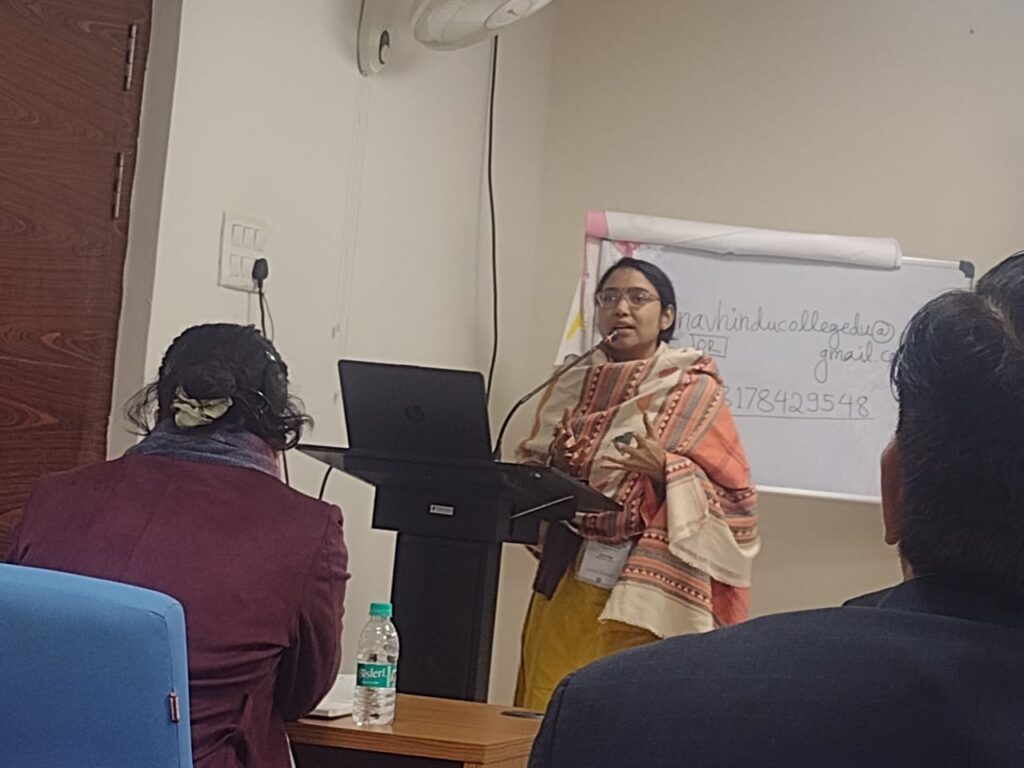
Date: December 13, 2025
Venue:SKIPA Campus, Ranchi, Jharkhand
Conference Organizers:Institute for Human Development (IHD) & Shri Krishna Institute of Public Administration (SKIPA)
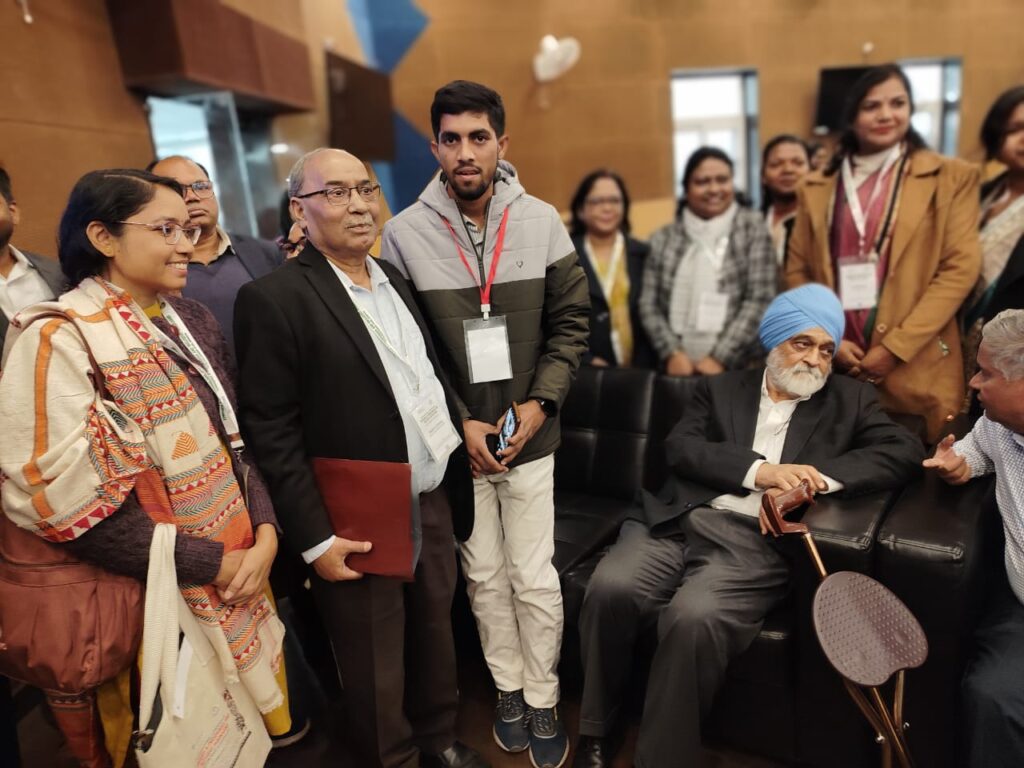
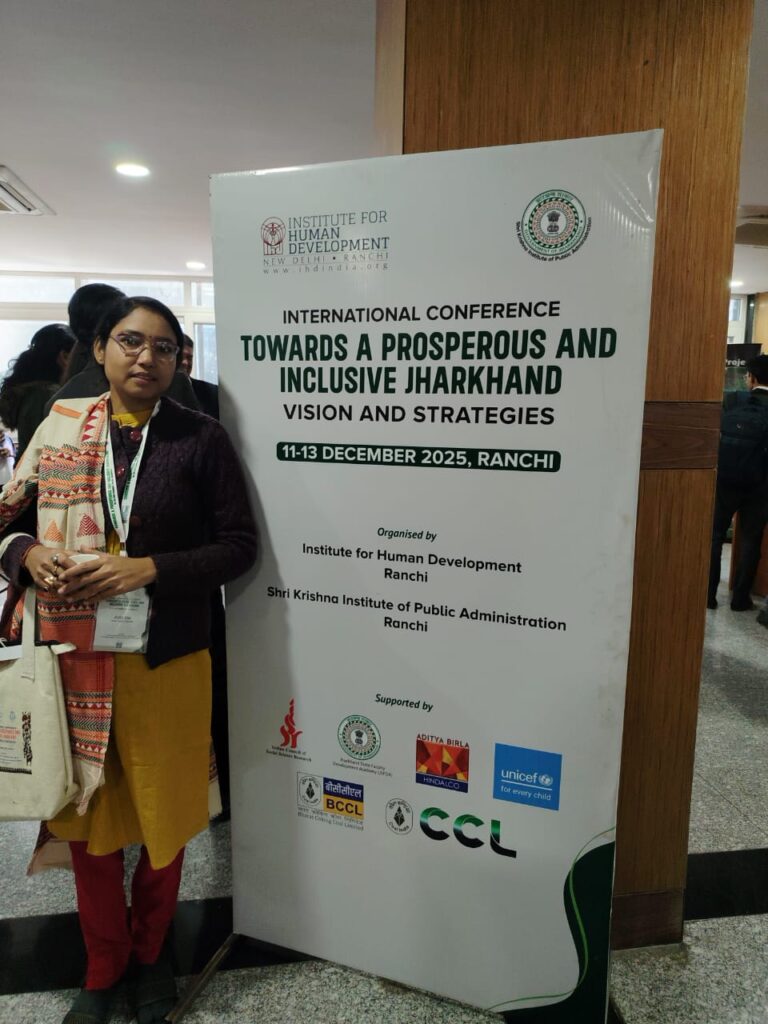
A landmark international conference, “Towards a Prosperous and Inclusive Jharkhand: Vision and Strategies,” held from December 11-13, 2025, provided a crucial platform for dialogue on the state’s development journey. A key session on inclusive urban growth in small and medium towns featured powerful grassroots insights from Ms. Anita Das, Mahasachiv of the Mahila Hawkers Federation, who eloquently connected the dots between urban informal livelihoods, tribal culture, and sustainable development.Key Themes and Arguments Presented by Ms. Anita Das:Ms. Das framed inclusive urbanisation as a moral commitment to those historically marginalised. Her intervention centered on two intertwined pillars:1. Street Vendors as Architects of Inclusive Towns:· Reframing the Narrative: She argued that street vending, predominantly led by women, must be seen not as a nuisance but as a vital solution for employment, food security, and vibrant local economies.· Beyond Space Allocation: True inclusion requires moving beyond merely allocating vending zones to ensuring vendors’ security, dignity, and access to basic infrastructure: safe transport (especially for pregnant women and those from distant areas), water, sanitation, childcare facilities, and public toilets with safe disposal systems.· Health and Well-being: Her research underscores severe health risks faced by women vendors due to long standing hours, inadequate nutrition, and poor healthcare access, necessitating regular health camps and nutritional support.· Policy Advocacy: She presented concrete demands, including night shelters, an end to police harassment, and the operation of vendor-friendly public transport.2. Non-Timber Forest Produce (NTFP) as the Cultural-Economic Spine:· Ms. Das highlighted that Jharkhand’s tribal identity and local economy are inseparable from its natural heritage. Even in urban Ranchi, tribal women selling sal leaf bowls and natural twigs in roadside haats are living symbols of this enduring culture.· NTFPs—like sal leaves, mahua, tamarind, and lac—are not just cultural markers but a critical source of livelihood and food security for tribal communities, forming a plastic-free, resilient, traditional economy.Conclusion & Vision:Ms.Das called for Jharkhand to lead by example by building an urban ecosystem where street vendors and forest produce collectors are recognized as central partners in development. She envisioned towns that are both “smart and sensitive,” where development is ecological, inclusive, and rooted in Jharkhand’s unique identity, ensuring that streets and forests alike are spaces of dignity and hope.Conference Synthesis and Recommendations:The session, featuring robust dialogue between academia, civil society, and grassroots leaders, culminated in key recommendations for policymakers and urban planners:1. Participatory Urban Planning: Integrate informal sector workers, especially women vendors, into the urban planning process from the outset. Their lived experience is critical data for creating functional and humane cities.2. Holistic Infrastructure for Inclusivity: Develop infrastructure in small and medium towns that specifically addresses the needs of the informal sector: vending hubs with water, sanitation, storage, and childcare; safe and affordable night shelters; and gender-sensitive public transport.3. Legal Protection and Dignity: Ensure the effective implementation of the Street Vendors Act 2014, with a focus on ending harassment and creating grievance redressal mechanisms accessible to vendors.4. Bridge Urban and Rural/Tribal Economies: Formulate policies that consciously link urban markets with rural NTFP collectors, creating ethical supply chains that value traditional knowledge and ensure fair remuneration, thus strengthening the circular local economy.5. Health and Social Security: Establish targeted welfare schemes, including regular health camps and nutritional support programs, for informal workers as essential components of urban development.Overall Conference Impact:The conference successfully underscored that Jharkhand’s prosperity is inextricably linked to its inclusivity. The path forward requires a development model that protects livelihoods in growing towns while safeguarding the cultural and economic heritage rooted in its forests. The insights from leaders like Ms. Anita Das provide a clear, concrete, and compassionate blueprint for action.—For more information on the conference proceedings or to access full speeches, please contact the Institute for Human Development (IHD).
Recent Comments