
Date: February 9, 2026
From: Conference Documentation Secretariat, Pragatisila Sramik Manch
Part 1: Recap of Day 1 & Introduction to Day 2
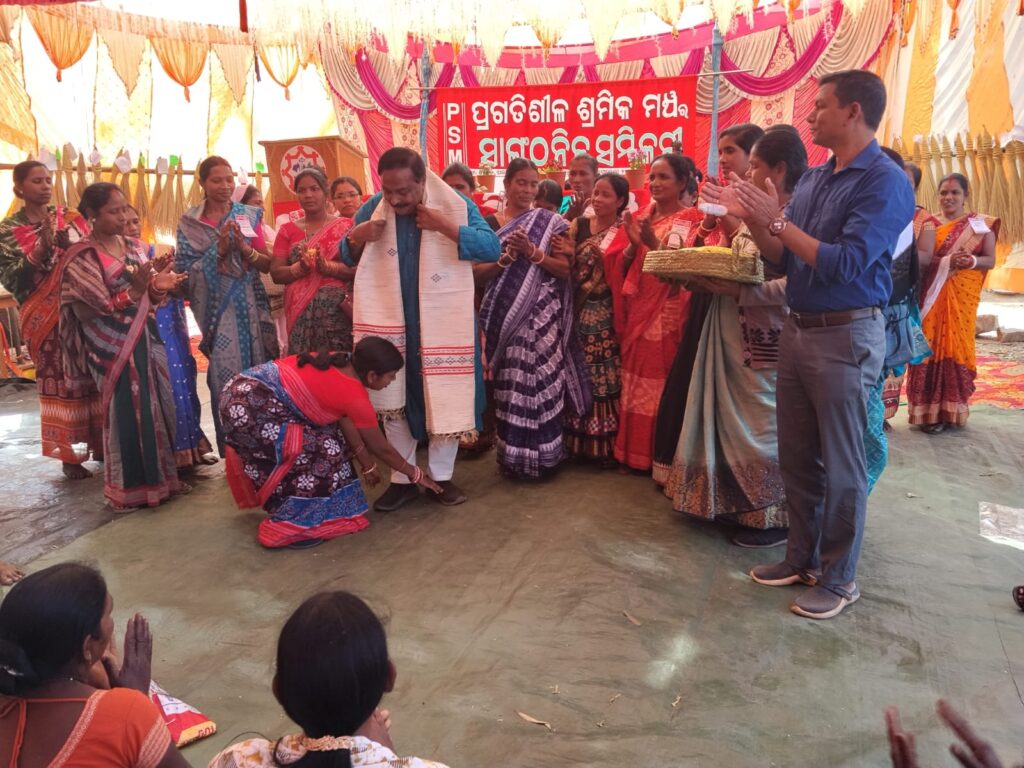
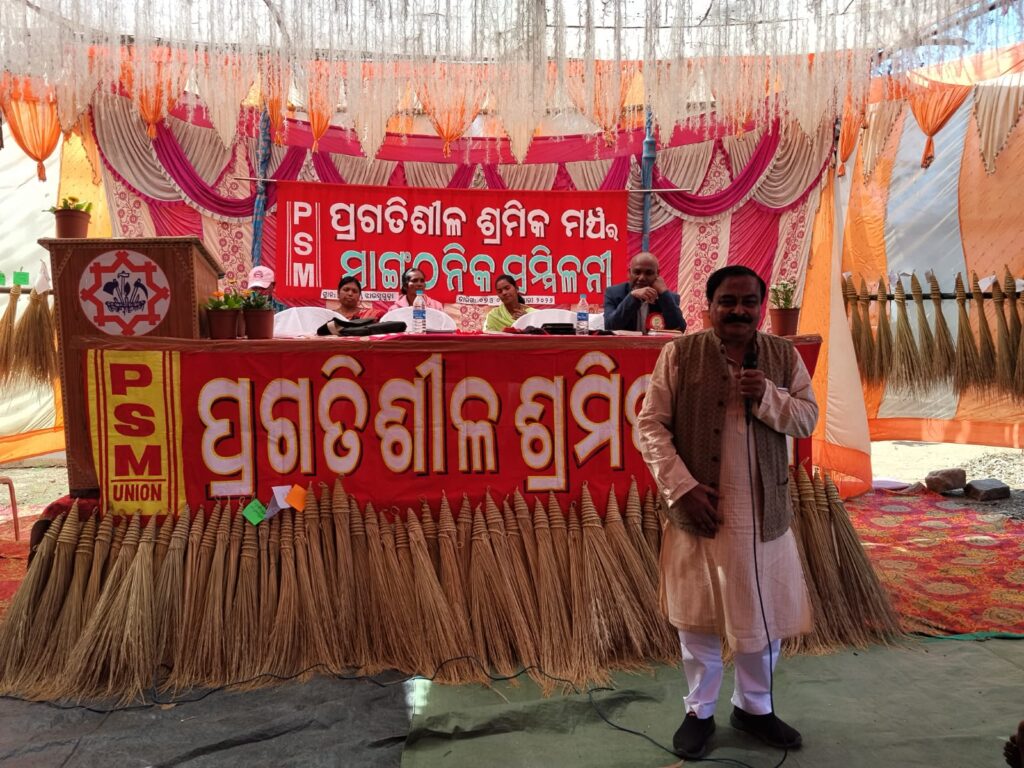
The inaugural day (February 7, 2026) of the Pragatisila Sramik Manch (PSM) Organisational Conference was marked by the inspirational presence and keynote address of Shri Shaktiman Ghosh, National Secretary of the National Hawker Federation (NHF). His address established a powerful framework of solidarity, connecting diverse informal sector struggles and setting a tone of strategic unity.Building upon that momentum, the second day (February 8, 2026) was meticulously designed as a day of “Planning and Power.” The agenda transitioned from shared understanding to concrete strategy, focusing on building durable organizational structures for the unorganized.
Part 2: Day 2 Programme – “Structures for Struggle”
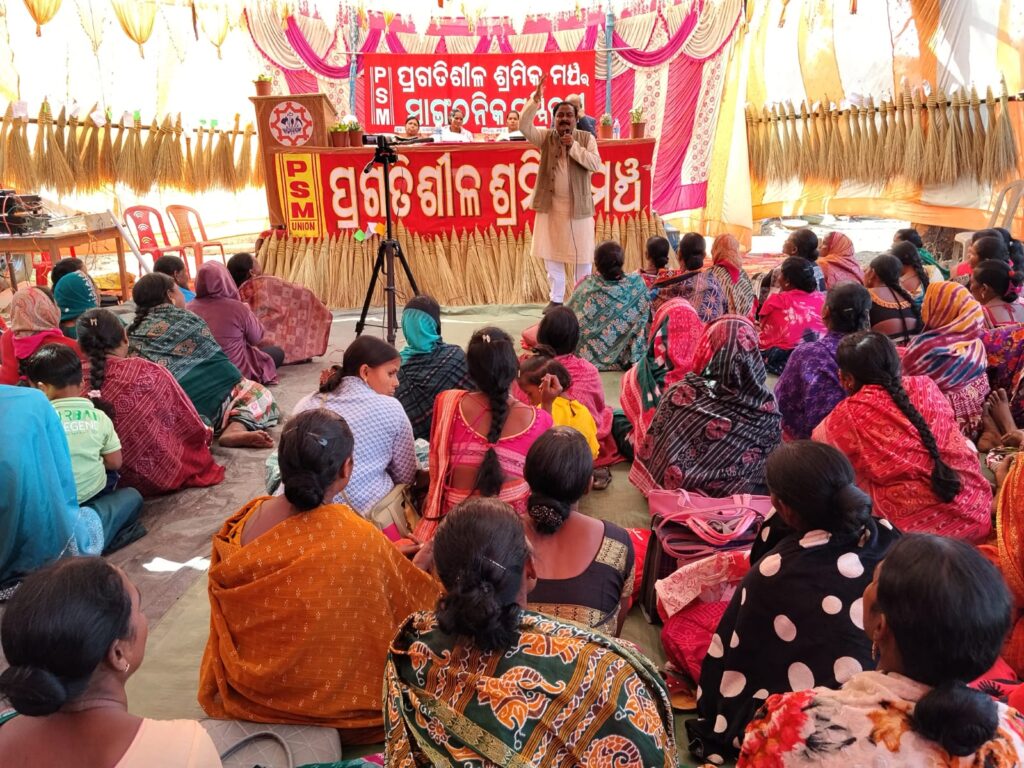
The day was structured into three intensive sessions:1. Morning Session: Sectoral Breakout Councils Workers split into their respective sectoral groups—Construction, Agriculture, Home-Based Work (Bidi/Kendu), and Loaders/Migrant Labour. Each council, facilitated by PSM leaders, undertook a deep analysis to: · Map specific exploitative practices (wage theft, piece-rate manipulation, safety violations). · Identify the key authorities and contractors responsible. · Draft preliminary, actionable sector-specific demands.2. Afternoon Session: Shaktiman Ghosh’s Masterclass on Organizing This was the core strategic session of the conference. Shri Ghosh, speaking not just as a leader but as a fellow organizer, delivered a profound lecture on “Sangathan ka Sutra: How to Organize the Unorganized.” His speech was a blend of practical wisdom and political philosophy.3. Evening Session: Synthesis and Resolutions Findings from the morning Sectoral Councils were presented to the full assembly. A resolutions committee, incorporating insights from Ghosh’s masterclass, began drafting a unified “Jharsuguda Charter of Demands” and a concrete action plan for the coming year.
Part 3: Shaktiman Ghosh’s Masterclass:
“Sangathan ka Sutra”Shri Ghosh’s afternoon address moved the audience from emotion to empowerment. He outlined a clear, replicable framework:· The Foundation: Identity and Dignity: He began by stating, “The first office of a union for the unorganized is not a room, but a space on the street, in the field, at the worksite.” He emphasized that organization starts with recognizing one’s own labour as valuable and asserting the collective identity of workers, much like PSM’s origin in asserting visibility after the Mehetu Naik case.· The Core Strategy: The 4D Model: He presented his foundational model: 1. Documentation: “Count yourselves, or the state will never count you.” He urged for meticulous member lists, grievance registers, and accident records—tools that transform anecdotal suffering into legal evidence. 2. Demonstration (Morcha): “A peaceful, collective presence is your first show of strength.” He stressed the importance of regular, localized demonstrations to assert existence and present demands directly to local officials. 3. Dialogue (Baatcheet): “From a position of collective strength, you enter talks.” He cautioned against begging and advocated for negotiation based on documented evidence and backed by the implicit power of the collective. 4. Development (Vikas): “The union’s work does not end with wages. It must fight for housing, water, healthcare, and education for workers’ children.” He praised PSM’s health camps and school enrollment drives as perfect examples of this holistic role.· Building Structure: The Committee Pyramid: Ghosh advocated for creating “Mohalla/Slum/Village-Level Committees” of 10-15 workers, feeding into Area Committees, culminating in a Central Union Body. “This is your organizational net,” he said, “that no worker can slip through.”· Legal-Awareness as a Weapon: He dedicated significant time to explaining how PSM and NHF have used laws—like the Street Vendors Act or the BOCW Act—not as gifts from above, but as “weapons we snatched through struggle.” He led the crowd in simple chants about key legal entitlements, turning dry legislation into a tool for mass awareness.
Part 4: The Valedictory Address (Sambardhona) & Conclusion
As the conference drew to a close, Shri Shaktiman Ghosh delivered a stirring Sambardhona (valedictory address). His tone was one of charged solidarity and solemn commitment.· A Movement at a Crossroads: He framed the PSM conference as a historic inflection point, not just for Odisha but for the Indian labour movement. “You are doing what the entire movement must learn: putting the most marginalized at the center.”· The Political Imperative: He moved beyond immediate demands, issuing a clarion call: “You must graduate from being shramik (workers) to being nagrik shramik (citizen-workers). Your demand is not for charity but for rights. Your politics must be the politics of claiming your constitutional due.”· A Pledge of Unbreakable Solidarity: In his most impactful moment, he declared, “The National Hawker Federation now stands shoulder-to-shoulder with Pragatisila Sramik Manch. Your fight is our fight. When you march in Bhubaneswar, we will be there. When we march in Delhi, we expect your strength with us.” This announcement was met with thunderous, prolonged applause, sealing an alliance beyond mere rhetoric.· Final Charge: He concluded by hoisting his fist in the air, leading the gathering of over 1,500 in a final pledge: “Ekta Zindabad! Sangathan Zindabad! Pragatisila Sramik Manch Zindabad!”Overall ConclusionThe two-day Organisational Conference successfully transitioned from a platform of articulation to a school of strategy. Shaktiman Ghosh’s role evolved from a dignified guest on Day 1 to a guiding strategist and sworn ally by Day 2. His teachings provided the organizational “how-to,” while his valedictory pledge provided the political fuel and national solidarity for the journey ahead.The conference did not just end; it launched a new, more connected, and strategically sharpened phase for Pragatisila Sramik Manch, now firmly embedded within a broader tapestry of India’s informal workers’ movement. The Jharsuguda Spirit, forged over these two days, is one of unified resolve, structured organizing, and an unwavering claim to rights and dignity.
Recent Comments