
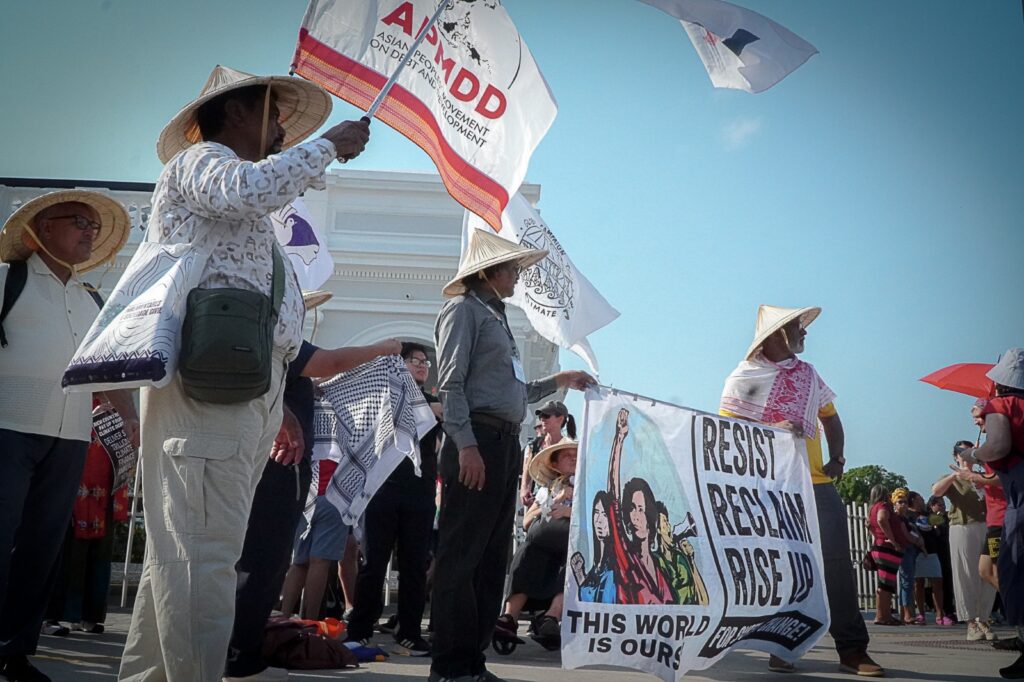
Belém, Brazil (November 22, 2025) –
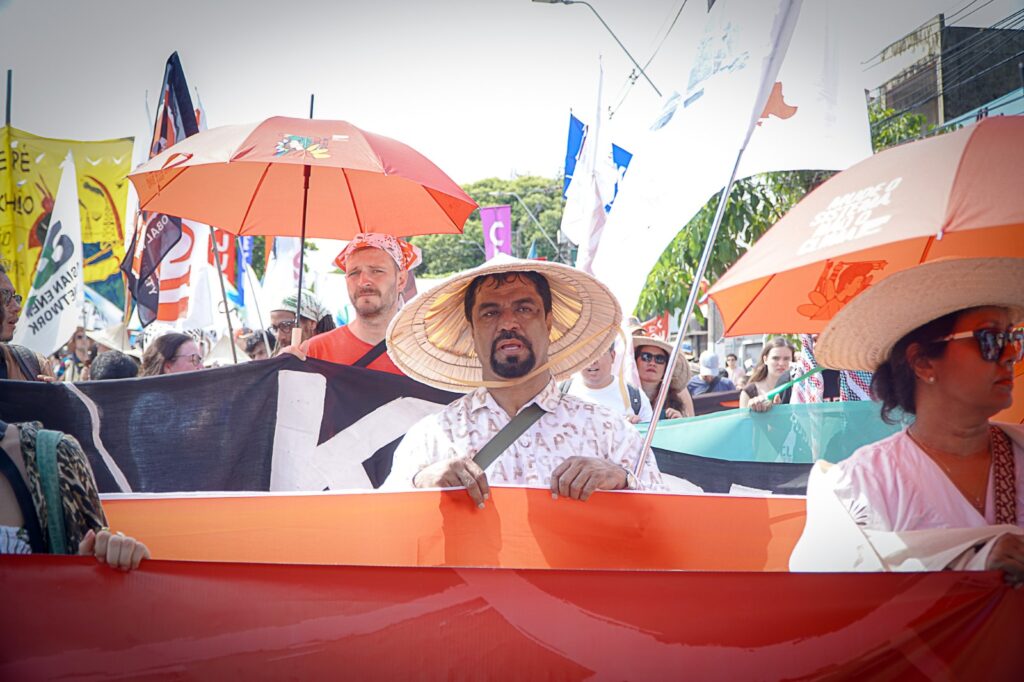
Amidst the procedural turmoil and tense negotiations that marked the closing of the UN Climate Change Conference (COP-30), a powerful, grassroots narrative emerged from the global margins. Amir Inayat Ali Bahri, Working President of India’s National Hawker Federation (NHF), stood as a first-ever representative of the world’s street vendors, bringing the visceral climate reality of the informal economy to the heart of the global policy debate.His participation, facilitated by an official invitation from the Asia Pacific Forum on Women, Law and Development (APWLD) and the NHF, marked a significant milestone. It signaled a growing recognition that those most vulnerable to climate change—the millions who work and live on the streets—must be central to the conversation on environmental justice.A Conference of Contrasts and ConflictCOP-30 convened against a stark backdrop: 2024 was confirmed as the warmest year on record, and the latest national climate plans (NDCs) remained critically insufficient. The conference was characterized by significant discord, particularly during a turbulent final plenary. Several nations, including Colombia, denounced the adopted “Mutirão” decision for failing to include robust language on fossil fuel phase-out or halting deforestation—core drivers of the crisis.”It is the hawker on the road, the driver, the construction worker who is most affected by the exploding ozone and polluted air,” stated Bahri, linking the conference’s policy gaps directly to human suffering. “The person working on the footpath for 20 years is aging 40 years prematurely because they consume this smoke daily. We are the canaries in the coal mine.”Amplifying the Frontline Experience in the Negotiation HubBahri’s intervention provided a crucial, ground-level perspective to the technical negotiations. While delegates debated transparency reports and finance flows, he underscored the daily lived experience of the climate crisis for over 10 million street vendors in India alone—a sector contributing an estimated ₹8,000 crores daily to the national economy.”The ‘COP of truth’ must listen to the truth from the streets,” he echoed, aligning with the critique voiced by several nations. “For us, climate change isn’t about future scenarios; it’s about polluted oxygen today, reduced earnings due to extreme heat, and health ruined by toxins we cannot escape.”His advocacy dovetailed with broader civil society movements at COP-30 challenging corporate power and advocating for a just transition. Notably, on November 12, a parallel hybrid event co-organized by APMDD—“Tax Justice for a Just Transition: Challenging Corporate Power from COP30 in Belém to the UN Tax Convention in Nairobi”—presented case studies from Brazil, the Philippines, and South Africa. It highlighted how multinational corporations engage in “greenwashing extractivism” and tax injustice, undermining genuine climate solutions. This event, attended by activists globally, reinforced Bahri’s core message: climate action must be rooted in equity and hold the powerful accountable.A Concrete Outcome and a Continued Journey While the main negotiations fell short on fossil fuels, the Brazilian Presidency responded to the pressure by announcing the development of two critical roadmaps: one for a just transition away from fossil fuels, and another for halting deforestation, with progress to be reviewed at COP-31 in Türkiye.For Bahri and the NHF, this represents a critical opening. “We will ensure that any ‘just transition’ roadmap includes the street vendor, the informal worker,” he asserted. “A transition that protects polluting industries while leaving the most vulnerable to breathe the consequences is not just—it is a failure.”A Legacy Beyond the Gavels, As the conference concluded, accepting Türkiye’s offer to host COP-31 and Ethiopia’s for COP-32, the legacy of COP-30 may well be defined not only by its fraught decisions but by whose voices broke through. Amir Inayat Ali Bahri’s presence, from the footpaths of India to the plenaries of Belém, established a vital precedent.”This invitation is not my victory, but a victory for every vendor on every footpath across the Global South,” Bahri concluded. “We have planted our flag here. Our voice, the voice of the street, will no longer be absent from the room where our future is decided. The fight we began for recognition on our own streets continues now on the world stage.”
Recent Comments