
Date: 8 November, 2025
Venue:Ujjayani, Madhya Pradesh
Event:National Leadership Meeting of the National Hawker Federation (NHF)
Book Title: “From Margins to Rights: Street Vending and Urban Governance in India – The Kolkata Experience”
Author: Dr. Rimpa Ghosh, Assistant Professor of History, Milli Al-Ameen College (For Girls), Kolkata.
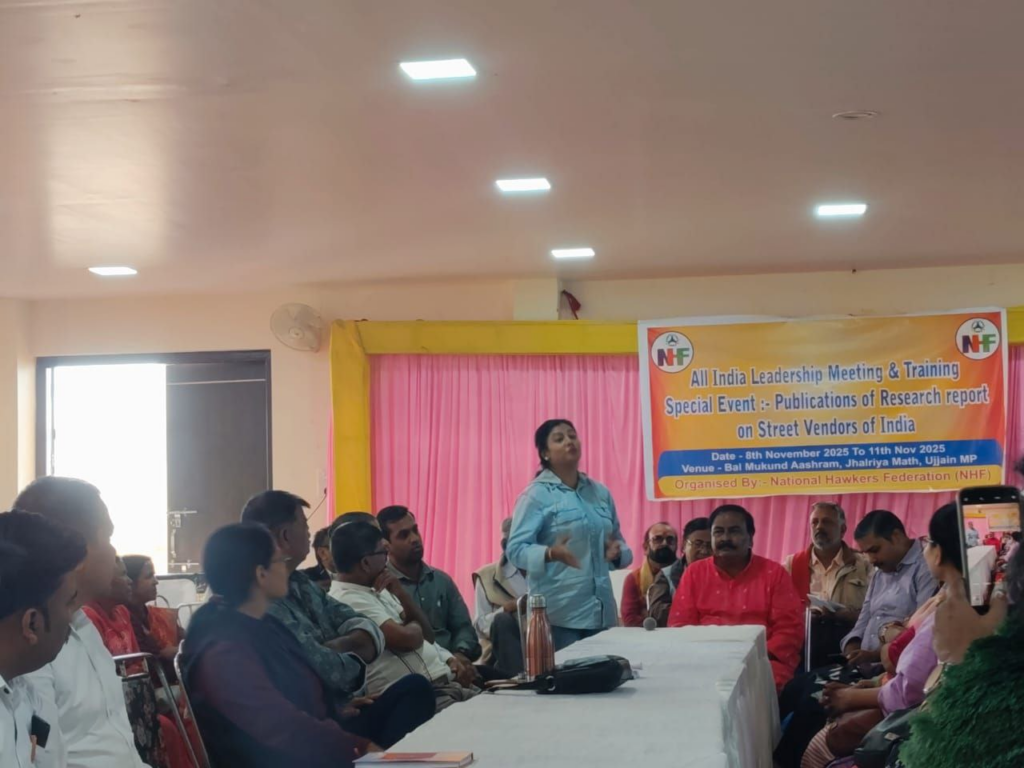
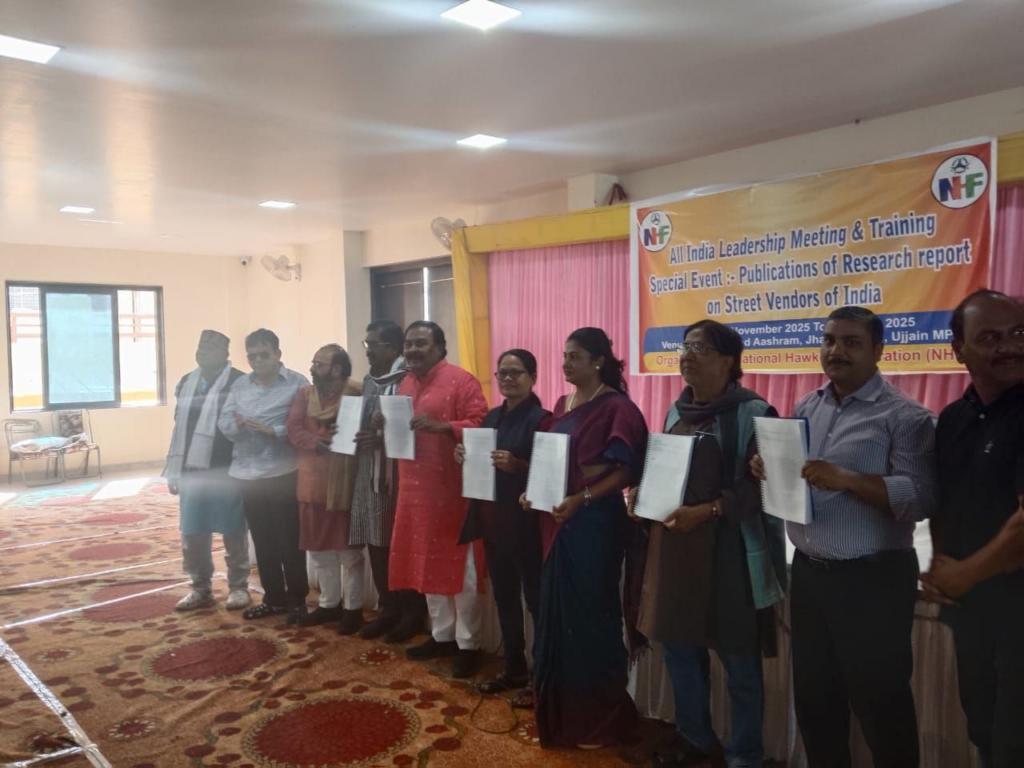
The launch and presentation of Dr. Rimpa Ghosh’s research-based book, “From Margins to Rights,” was organized as a special segment within the National Leadership Meeting of the National Hawker Federation. The book’s subject matter—the rights of street vendors and urban governance—is directly relevant to the NHF’s struggles and objectives, making this meeting a fitting platform for the event.
In her address, Dr. Rimpa Ghosh summarized the book’s main arguments and findings. She stated that street vending is not merely an economic activity; it is linked to questions of citizenship, urban justice, and the ‘right to the city’. Although the 2014 Street Vendors (Protection of Livelihood and Regulation of Street Vending) Act was a landmark step, a significant gap remains in its implementation.
She particularly highlighted the experience of West Bengal and Kolkata. Her research reveals that the practical success of the law largely depends on local administration, political culture, and the organization of vendors. Her research was enriched by interviews conducted with NHF leaders, ordinary vendors, and Kolkata Municipal Corporation administrator Shri Devashish Kumar.
Key Points from her Presentation:
· Technology and Transparency: Dr. Ghosh mentioned digital transparency initiatives, such as the online availability of license and consent meeting minutes. However, her research also identified legal complexities associated with these, as seen in cities like Delhi.
· Town Vending Committee (TVC): She emphasized the importance of regular TVC meetings but also critiqued its electoral process. According to her, the TVC should be a democratically elected representative body of vendors, where representatives from organizations find a place based on their mandate, not political influence.
· Women Vendors: The research highlights specific challenges faced by women vendors, such as maternity benefits, creche facilities for children, etc.
· Role of Organizations: She stressed the necessity of strong, democratic vendor organizations that can play a key role in overcoming vendors’ vulnerabilities vis-à-vis the bureaucracy and in establishing their rights.
Reception and Discussion:
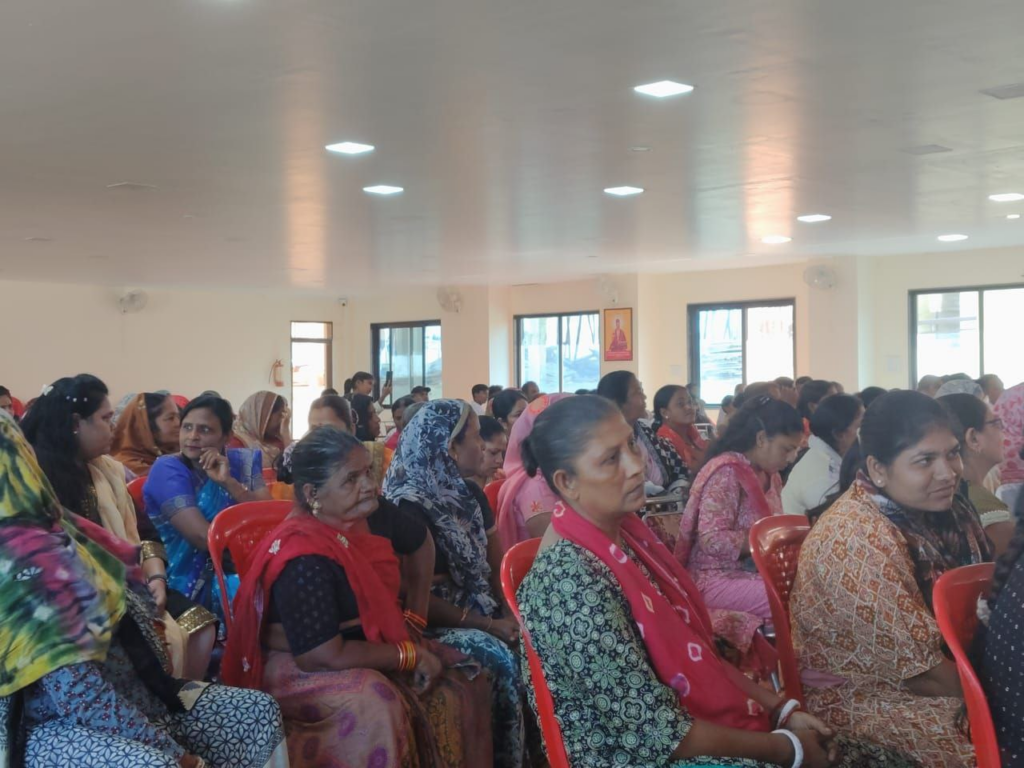
NHF leadership and members welcomed the book as a significant, instructive document reflecting their long-standing movement and practical experiences. They expressed satisfaction at seeing their voices and struggles reflected in Dr. Ghosh’s research. The meeting held constructive discussions on the policy reforms and implementation framework proposed in the book. Present vendor representatives showed keen interest in how the book could be utilized in their local struggles.
The launch and presentation of Dr. Rimpa Ghosh’s book was a significant event at the NHF National Leadership Meeting. It was not merely the promotion of a research volume but the creation of a bridge between academia and the ground realities of the movement. It is hoped that the book will serve as a new, fact-based, and analytical tool in the movement to protect street vendors’ rights and establish their rightful place in urban policy. Dr. Ghosh expressed gratitude to the Friedrich Ebert Stiftung for supporting her research, and to her mentors Professor Om Prakash Mishra and Dr. Indrajit Banerjee.
Recent Comments